Project Insights
A deep dive into the data, algorithms, and performance metrics behind CardioPredict.
The Methodology
A systematic approach to data cleaning, feature engineering, and model selection.
Data Cleaning
Removing physiological outliers (e.g., blood pressure readings > 250 or < 40) to ensure the model learns from clinically plausible data patterns.
Feature Scaling
Applying StandardScaler to normalize metrics across different units (Age in days, BP in mmHg), preventing high-magnitude features from biasing the results.
Model Optimization
Optimizing Gradient Boosting parameters with early stopping and regularization to prevent overfitting while maximizing predictive accuracy.
💾The Dataset
We utilized the widely respected Cardiovascular Disease Dataset from Kaggle. It contains over 70,000 patient records with 11 distinct features, providing a robust foundation for training machine learning models.
Target Variable
Objective: Predict presence of heart disease (Binary Classification).0 = No Disease, 1 = Disease present.
- Demographics: Age, Gender, Height, Weight.
- Exam Results: Blood Pressure (Systolic & Diastolic), Cholesterol, Glucose.
- Lifestyles: Smoking, Alcohol, Physical Activity.
XGBoost Classifier
We utilized XGBoost (Extreme Gradient Boosting), a state-of-the-art machine learning algorithm known for its high performance and scalability. It builds an ensemble of decision trees to capture complex non-linear relationships in the data.
Model Performance
Confusion Matrix
ROC Curve Analysis
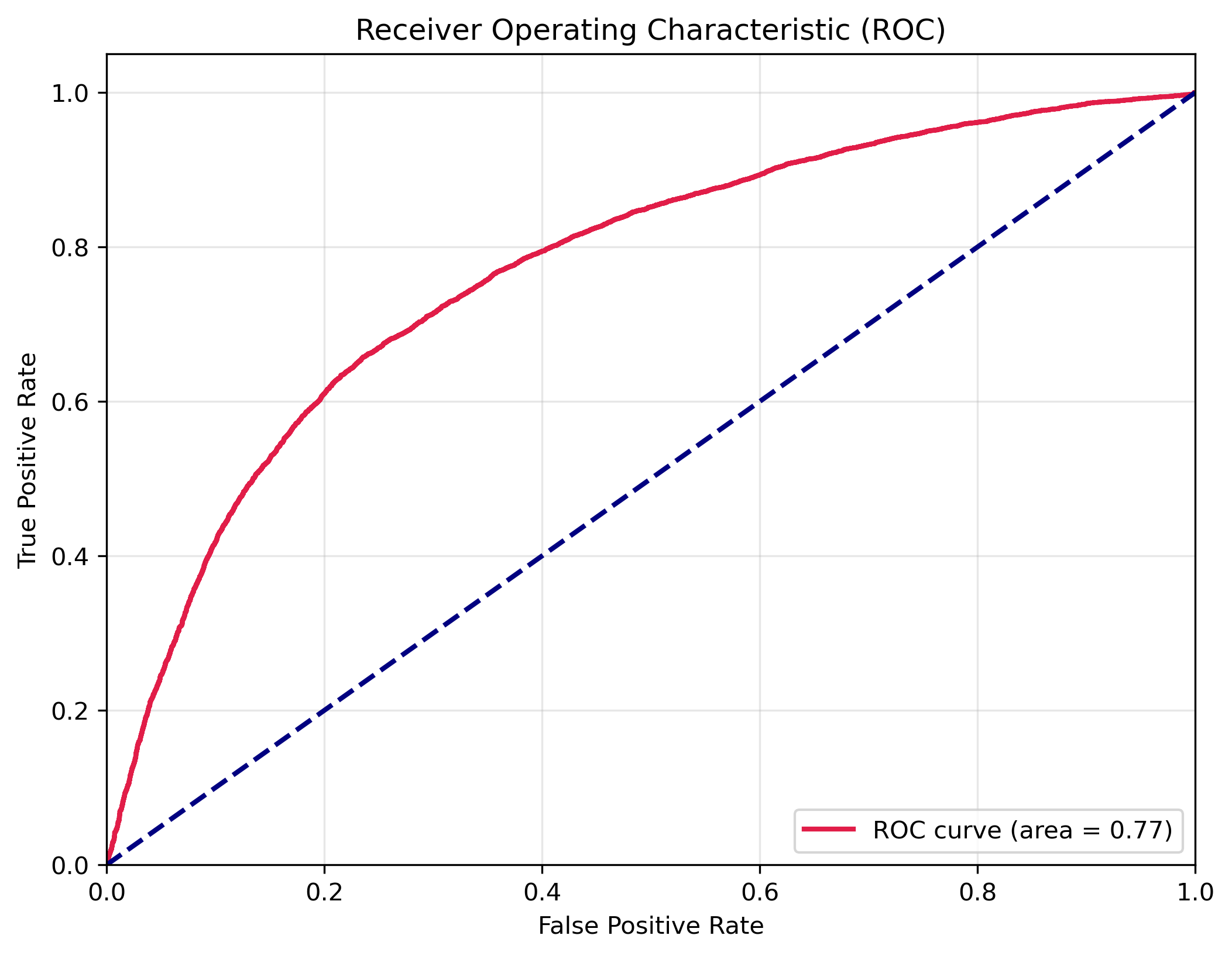
The Receiver Operating Characteristic (ROC) curve illustrates the diagnostic ability of our XGBoost classifier. An Area Under the Curve (AUC) of ~0.80 indicates good discriminative power between patients with and without cardiovascular disease.
Clinical Disclaimer
This tool is designed for educational and informational purposes only. It is not a substitute for professional medical advice, diagnosis, or treatment.
"While our model achieves high diagnostic accuracy, always consult a certified healthcare provider regarding any cardiovascular concerns or symptoms."